If you are weighing a new townhome or newly built home in Redwood City, you are probably trying to balance three things at once: price, lifestyle, and long-term confidence in what you are buying. That can feel especially tricky in a market where detached homes, condos, and townhomes can serve very different goals. The good news is that Redwood City offers a meaningful pipeline of attached housing, and if you know what to review, you can shop with far more clarity. Let’s dive in.
Why Redwood City has new townhome options
Redwood City’s planning framework supports additional housing production, and that matters if you want newer inventory instead of only older resale homes. The city’s General Plan guides growth and development, and its Housing Element is the main tool for meeting housing goals.
That policy direction shows up in the local housing mix. According to the city’s housing-stock summary, detached homes make up about 45% of units, attached single-family homes about 13%, multifamily units about 41%, and mobile homes about 2%. In practical terms, townhome-style housing is an important part of the market, even if it is not the dominant product type.
The current development pipeline helps explain what buyers are seeing. Redwood City’s development applications include projects such as Vera Avenue Townhomes, Strada at 1548 Maple, 1409 El Camino Real, and Blu Harbor. The city’s Housing Element also notes that 1548 Maple is expected to provide 131 three-story for-sale townhome units along the waterfront.
What new construction looks like here
In Redwood City, new attached housing often appears on larger infill or redevelopment sites rather than scattered vacant lots. That means you may find new communities near major corridors, waterfront areas, or underused parcels that are being reimagined for housing.
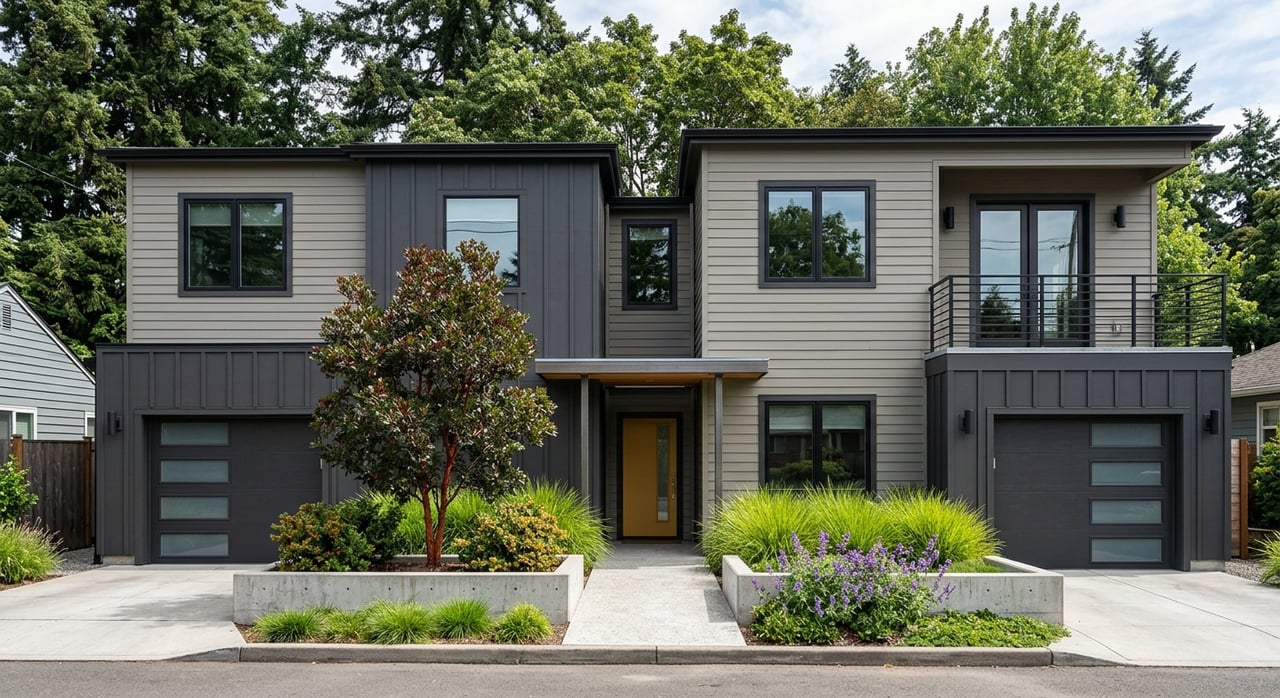
One recent example is 505 E. Bayshore. A city staff report describes 56 townhomes with two-, three-, and four-bedroom floor plans ranging from about 1,200 to 1,700 square feet. The same report says the homes include two-car garages, contemporary design, porches and stoops, roof decks on several plans, a private amenity area, and pedestrian access to the Bay Trail.
Redwood City also includes smaller and larger formats in the pipeline. Vera Avenue Townhomes is a smaller 10-unit example, while 1548 Maple is a much larger waterfront project. For you as a buyer, that means your choices may range from more intimate infill communities to larger planned developments with broader amenity packages and more formal HOA structures.
How townhome pricing compares
A current market snapshot suggests attached homes often price below the citywide detached-home median. Redfin shows a Redwood City median sale price of about $1.9 million, with 7 townhouses for sale at a median listing price of about $1.39 million and 30 condos for sale at a median listing price of about $999,000.
Those figures are not directly comparable because they mix sale and listing data. Still, they offer a useful directional takeaway. If you want Redwood City ownership with newer finishes or a lower-maintenance setup, a townhome may offer a lower entry point than a detached home in the same city.
The city’s Housing Element also cites regional research showing new construction is generally more expensive than existing housing, and that pricing can vary based on project scale and amenities. That helps explain why a newer attached home may still cost more than an older unit with a similar bedroom count.
How California townhome ownership works
One of the biggest misunderstandings around townhomes is that the word “townhome” does not always describe the legal ownership structure. In California, a townhome community is often a common interest development or planned development, not a separate legal property type by itself.
That distinction matters because membership in the homeowners association is usually automatic when you buy in one of these communities. The California Department of Real Estate says associations are commonly nonprofit mutual benefit corporations, homeowners elect a board, and the community is governed by CC&Rs that address common areas, assessments, insurance, and architectural control.
In other words, two communities that both look like townhomes from the street may operate differently behind the scenes. Before you buy, it is worth confirming whether the home is part of a planned development or another common interest structure and how that affects title, maintenance, and decision-making.
What to know about HOA responsibilities
For many buyers, the real issue is not whether there is an HOA. It is what the HOA actually owns, maintains, and controls. In planned developments, the association may handle private streets, shared landscaping, pools, clubhouses, lakes, or other common amenities.
Those responsibilities shape your monthly dues and your future budget exposure. California rules require associations to levy regular and special assessments sufficient to meet their obligations. There are also limits tied to member voting before special assessments exceed 5% of budgeted gross expenses in the aggregate or before a regular assessment increases by more than 20% year over year.
Reserve planning matters too. Reserve studies must be completed at least once every three years for qualifying associations, and the annual budget and disclosure package includes reserve-funding information. For you, that means the HOA documents are not just paperwork. They are one of the clearest windows into the financial health of the community.
Why the public report matters
If you are buying new construction in California, one of the most important documents is the Department of Real Estate public report. Before a new subdivision can be marketed, the subdivider must obtain this report.
The public report includes material disclosures such as CC&Rs, HOA cost and assessment information, and other key details about the project. Buyers must receive it before they become obligated to purchase. That timing is important because it gives you a chance to review the structure of the community before you are locked in.
This is especially helpful in new Redwood City developments where the homes may be visually similar but the ownership terms, expense structure, and common-area obligations can vary. A careful review early in the process can prevent surprises later.
Builder warranties and defect protection
A major advantage of new construction is that you are buying into a newer physical structure with a defined repair framework. In California, the new-home defect process is shaped by SB 800.
The Contractors State License Board says buyers must contact the builder before filing suit, and the pre-litigation process applies to new residential homes purchased after January 1, 2003. Civil Code Section 900 requires a one-year express written limited warranty for fit-and-finish items such as cabinets, flooring, paint, and trim.
There are also broader defect standards under Civil Code Section 896, and Civil Code Section 941 generally bars actions more than 10 years after substantial completion. The practical takeaway is simple: a new home gives you a statutory path for repair issues, but it does not mean maintenance concerns disappear. You still want to understand how the builder handles service requests in practice.
How affordability rules may affect a project
Large for-sale developments in Redwood City may also include below-market-rate housing requirements. The city says market-rate for-sale developments with 20 or more units must set aside 15% of units for moderate-income households.
That does not mean every home in the project has the same ownership terms. Redwood City also states that below-market-rate owners must occupy the home as their primary residence and cannot rent it without city approval. If you are comparing homes in a larger new community, ask whether any units are subject to different occupancy or resale rules.
This is not necessarily a negative. It is simply a reminder to avoid assumptions. Two homes in the same project can sit within the same streetscape while operating under different restrictions.
A smart due diligence checklist
Before you move forward on a new townhome or new construction home in Redwood City, focus on the details that affect ownership and long-term cost.
- Confirm the legal ownership structure of the property.
- Review what the HOA maintains, including roofs, private streets, landscaping, and amenities.
- Ask for the public report, CC&Rs, budget, and reserve disclosures before writing or finalizing an offer.
- Clarify the builder’s warranty process and how service requests are handled.
- Check whether the project includes below-market-rate units or resale restrictions.
These steps can help you compare communities on more than surface-level finishes. A sleek kitchen and new flooring are easy to notice. Governance, reserves, and maintenance obligations matter just as much once you own the home.
When a new townhome makes sense
A new townhome in Redwood City often makes sense if your priorities include modern layouts, newer systems, and a more shared-maintenance lifestyle. It can also be a compelling option if you want Redwood City ownership but are looking below the price point of many detached homes.
An older detached home may be a better fit if you want more autonomy, fewer HOA rules, or value the flexibility that can come with land and older neighborhood character. Neither path is automatically better. It depends on how you want to live and what tradeoffs feel worthwhile to you.
Redwood City’s current pipeline suggests attached homes will remain an important part of local infill, corridor, and waterfront redevelopment. If you are considering one, the right approach is not just finding a beautiful unit. It is understanding the structure behind the purchase so you can move forward with confidence.
If you want experienced, senior-level guidance on buying a new townhome or new construction home in Redwood City, Allen Nazari offers discreet, hands-on advice tailored to your goals.
FAQs
What should you review before buying a new townhome in Redwood City?
- You should review the legal ownership structure, HOA maintenance responsibilities, CC&Rs, budget, reserve disclosures, the DRE public report, the builder warranty process, and whether any units are subject to below-market-rate or resale restrictions.
How are townhomes in Redwood City usually owned?
- Many Redwood City townhomes are part of a common interest development or planned development, where HOA membership is automatic and the community is governed by CC&Rs and association rules.
Are new townhomes in Redwood City usually less expensive than detached homes?
- Current market snapshots suggest attached homes often list below the citywide detached-home median, although listing and sale figures are not directly comparable and each property should be evaluated on its own.
What does an HOA usually cover in a Redwood City townhome community?
- Depending on the project, the HOA may maintain items such as private streets, shared landscaping, roofs, and community amenities, which is why the governing documents and budget disclosures are so important.
Do new construction homes in Redwood City come with warranty protection?
- Yes, California’s SB 800 framework provides a repair process for qualifying new homes, including a one-year limited warranty for certain fit-and-finish items and broader defect standards under state law.
Can ownership rules differ within the same new Redwood City community?
- Yes, in larger projects some units may be subject to below-market-rate occupancy or resale rules, so you should confirm whether the specific home you are considering has any additional restrictions.